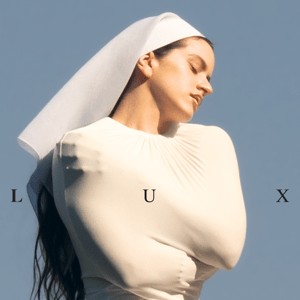
It’s time for the review of ROSALÍA’s LUX.
ROSALÍA is a singer, songwriter, and now actress – set to star in the upcoming season of HBO’s Euphoria. After a three-year wait, ROSALÍA has finally dropped the long-awaited follow up to MOTOMAMI. A record that saw the singer experiment with a range of styles, from experimental pop to reggaeton, blending that with Latin American sounds that were trending at the time of MOTOMAMI’s release.
Even though I enjoyed MOTOMAMI a ton, I always felt ROSALÍA didn’t fully take advantage of her vocal prowess. Many of the genres explored on that record relied more on catchy production than on her vocals. Still, MOTOMAMI propelled the Catalan singer to global stardom with hits like “LA FAMA,” and “DESPECHÁ” – before we had the cultural movement of “I want to be BRAT,” we had “Quiero ser MOTOMAMI.”
With LUX, we now see ROSALÍA stepping into something entirely new.
ROSALÍA’s fourth studio album feels deeply cinematic, with a sound largely built around orchestral organs and strings performed by the London Symphony Orchestra. The grand instrumentation compliment LUX’s central theme, introduced in the opening track “Sexo, Violencia y Llantas,” which explores the tension between indulging in life’s pleasures and striving to live a divine, saintly life in the eyes of God. In several interviews, ROSALÍA has mentioned that while LUX draws from her own personal experiences, she also wanted to weave in universal themes – some of which she hasn’t lived herself. The inspiration for those narratives come from female saints and martyrs whom ROSALÍA studied during the album’s creation. That’s why she sings in 13 different languages: the Catalonian artist is channeling the voices and experiences of said saints and martyrs.
The opening track perfectly transitions into “Reliquia,” which translates to “Relic.” The song serves as a metaphor for ROSALÍA’s heart and the many setbacks it’s endured – even referencing the places where they took place. Through this track, ROSALÍA expresses that she runs on love but feels she has little left to give, her heart worn down by it all. My favorite detail is how the production shifts from organic to synthetic sounds, reflecting the contrast between the divine and superficial ways of living. It’s also worth noting that Guy-Manuel de Homem-Christo , one half of the legendary electronic duo Daft Punk, is listed as a composer on the track.
We then move on to the third track “Divinize.” In “Divinize,” the Spanish songwriter portray her body as a temple, exploring the desires and restraints in her life as she strives for personal transcendence. Throughout the song, ROSALÍA realizes that those moments of struggle are necessary to reach that divine status. The track switches back and forth between English and Catalan. Personally, the more I listened to “Divinize,” the more thrown off I felt by the language shifts. In songs like “Porcelana” and “Berghain,” the transitions into a different language felt smoother – ROSALÍA either commits to one language for an entire verse, or it serves as the chorus, which makes it flow more naturally.
“Porcelana” starts off with the same orchestral-style production that runs throughout the album but soon transitions into a more cynical version of it. Once again, the sound shifts when our protagonist indulges in earthly pleasures, pulling her away from those angelic tones. At one point, ROSALÍA pitches her voice, making the track sound like something that could come straight out of a John Glacier song. In “Porcelana,” she also pays homage to Japanese poet Ryōnen Gensō – a woman who allegedly went as far as scarring her own face just to be accepted into a monastery. It’s one of the more haunting moments on the record, showing how far ROSALÍA is willing to go to merge beauty and pain into something transcendent.
Let’s talk about the lead single leading up to LUX: “Berghain.” A grandiose intro that instantly made me feel like a conductor for a second. In “Berghain, ROSALÍA compares herself to a sugar lump in coffee – feeling like just an ingredient in someone else’s mix. Her obsession blinds her as she gives her all to this partner, even though the mistreatment and neglect, still hoping things work out. The additions of Björk and Yves Tumor are more than welcome, each adding depth to the song’s themes of reflection and obsession. It also feels like a full-circle moment seeing ROSALÍA collaborate with Björk – two artists who’ve continuously pushed and redefined the standards of pop music in their own eras. This collab raises the question: Is ROSALÍA the Björk of our generation?
The song “La Perla” is a waltz that serves as a tell-all for one of ROSALÍA’s exes. In this track she has her own LEMONADE moment – calling out the person as a playboy, a cheater, and much more. This same person also took pride in their bra collection and vanished when they were needed the most. There’s no holding back from ROSALÍA. At the moment “La Perla” has been the center of conversation, with many speculating that it’s directed at ROSALÍA’s ex, Rauw Alejandro – whom she was engaged to until 2023, when the couple suddenly split (rumored to be due to infidelity). We’ll leave it at that – you can draw your own conclusions, but a lot adds up when you listen to “La Perla,” just saying. Controversy aside, I was really impressed with Yaritza’s verse on “La Perla.” Honestly, I couldn’t even tell the difference between her voice and ROSALÍA’s – which is a huge compliment, considering how strong of a vocalist ROSALÍA is.
Throughout LUX, there are several other highlights, like “De Madruga,” a song that brings back some of those MOTOMAMI vibes. I wouldn’t be surprised if it were a leftover track that got reworked for this record. It’s driven by catchy bass lines courtesy of Pharrell Williams.
Then there’s “Sauvignon Blanc,” where ROSALÍA sounds like a disney princess singing her heart out from a castle. (For context, i was listening to LUX on my way to Disneyland, so maybe that’s where that comparison comes from.) The song radiates hope , with ROSALÍA pouring her heart into every note.
My favorite track on the record, “Dios es un Stalker,” is playful and a little twisted, with ROSALÍA cosplaying as God while spying on the person she’s obsessed with. The song feels innocent at first, but the more you listen, the more unsettling it becomes. It creeps up on you – you’re dancing to it’s catchy rhythms before fully realizing the situation. The production takes it to another level. The intro feels like you’re peeking over someone’s shoulder , watching from the unknown, and when the piano slides in during the second half, it creeps in and out like the shady presence ROSALÍA is playing. All of this comes together in a short, straight to the point, unforgettable track that does so much in just over two minutes.
We arrive at the finale of LUX with “Magnolias.” The intro is reminiscent of “Pure Love” from the score of the movie Queer. On this track, ROSALÍA plays with the idea of death – you could even say she almost fantasizes about it. It marks the closing of the record and the end of this chapter.
ROSALÍA demands her flowers here, ascending to a divine status both conceptually and within the album itself. Musically, the Catalan singer cements herself as a poet and a legend in the music world.
Verdict: ROSALÍA’s LUX is cinematic, cohesive, and heartfelt from start to finish. Every element – from the classical production to the vulnerability in her lyrics – it perfectly aligns with the records central theme, and is elevated by her stellar voice. The multilingual approach adds depth and universality, proving that this record speaks to listeners everywhere without compromising quality. With LUX, ROSALÍA doesn’t just deliver another album, she becomes an innovator, and cements herself in a league of her own.
Score: 9/10


 lost & founded